All About Bed Bugs: Understanding Heat Treatment for Effective Elimination
Bed bugs are well known for their capacity to infiltrate homes and disturb daily life. Recognizing their habits and the indicators of an infestation is essential for homeowners. Within the range of extermination approaches, heat treatment distinguishes itself as a potent, chemical-free remedy. It successfully addresses every life stage of these insects. Proper preparation is crucial to its effectiveness, yet many homeowners neglect important steps prior to treatment. Exploring these aspects can reveal more about how to combat this persistent problem.
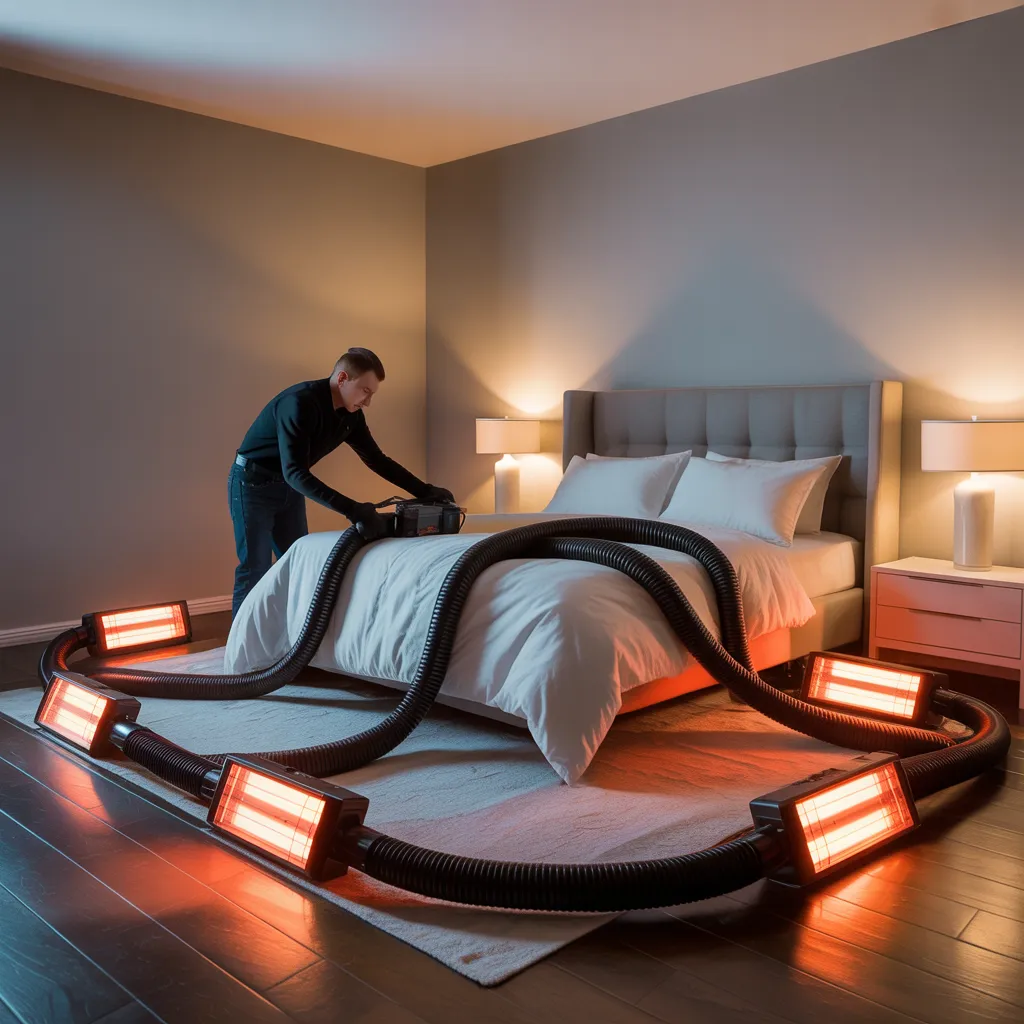
What Are Bed Bugs and How Do They Spread Into Your Home?
Bed bug infestations, small nocturnal insects belonging to the Cimex family, have become notorious for their ability to invade homes and disrupt lives. These pests are adept at latching onto clothing, luggage, and furniture, rendering them widespread nuisances throughout metropolitan areas. After gaining entry, these pests commonly seek shelter in narrow openings and hidden spaces, especially near beds and upholstered furniture, enabling them to avoid detection during daytime hours.
Their reproductive capabilities enhance their infestation potential; females have the ability to deposit hundreds of eggs over their lifetime, causing accelerated population increases. Bed bugs flourish in warm, dimly lit spaces, enabling them to remain near their main food source—human blood. Their stealthy behavior and resilience make early detection challenging, often resulting in widespread infestations before homeowners realize the problem. Comprehending their behaviors is critical for developing successful prevention and treatment approaches.
Bed Bug Infestation Warning Signs: What to Look For
Identifying a bed bug infestation early is vital for effective management. Occupants should remain alert to certain signs that point to their existence. Frequent indicators consist of dark, reddish-brown stains on bedding or furniture, which are excrement left by the insects. Additionally, shed exoskeletons, often found near hiding spots, signify that bed bugs are maturing.
Skin bites, typically in clusters or lines, may occur as bed bugs feed at night. These bites can cause itching or irritation, encouraging a more thorough examination. A distinctive musty scent may also arise from areas additional article with infestations, caused by the secretions of bed bugs.
Examining seams of mattresses, behind headboards, and in the crevices of furniture is important, as these locations are preferred hiding areas. Early detection guarantees timely intervention, avoiding a widespread infestation that could lead to considerable extermination measures.
How Heat Treatment Works to Eliminate Bed Bugs
Proper handling of a bed bug infestation necessitates familiarity with the techniques available for extermination. Heat treatment is a widely recognized approach, employing high temperatures to eliminate these pests. The process involves elevating the temperature of affected spaces to between 120°F and 140°F, effectively penetrating walls, furniture, and other concealed areas where bed bugs dwell.
Bed bugs have a significant weakness to heat; subjecting them to temperatures over 113°F for as little as 90 minutes eliminates them at all stages of development. This method also targets eggs, which are notoriously resilient. In the course of heat treatment, advanced equipment is employed to ensure consistent heat distribution, avoiding cold spots that bed bugs might use as refuge.
Furthermore, heat treatment is chemical-free, making it an environmentally conscious option for pest control. By impeding the bed bugs' physiological processes, heat treatment not only removes active infestations but also helps in preventing recurring infestations.
Why Heat Treatment Is the Best Solution for Bed Bugs
Heat treatment stands out as the premier solution for eliminating bed bugs because of its capacity to target and destroy pests at every life stage, including eggs. As opposed to chemical methods, which may spare some bugs, heat infiltrates furniture, cracks, and crevices, ensuring complete coverage. The technique requires increasing the temperature of the infested space to a lethal range, usually maintained between 120°F and 140°F, efficiently eliminating bed bugs upon contact. This method eliminates the need for repeated applications, reducing the chances of resistance development. Moreover, heat treatment is considered environmentally responsible, because it limits exposure to harmful chemicals. Its rapid results present an added advantage; nearly all treatments wrap up in just one day, permitting a speedy restoration of routine. Ultimately, heat treatment's precision, efficiency, and safety establish it as a favored option for homeowners in search of reliable bed bug remedies.
How to Get Ready for Bed Bug Heat Treatment
Planning for bed bug heat treatment requires careful planning to ensure the process is effective. Homeowners should start by decluttering the affected areas, eliminating objects that could block heat penetration. All garments, linens, and personal possessions should be washed in hot water and dried on high heat to remove any remaining bed bugs. It is critical to vacuum the entire area carefully, giving special consideration to small openings and corners where bed bugs could be concealed.
In addition, pets need to be taken out during treatment, and plants ought to be relocated outdoors to protect them from the high temperatures. Electronic equipment, including TVs and computers, should be taken out or protected to shield them from the effects of heat. Finally, homeowners should ascertain that the treatment area is accessible, permitting technicians to operate without hindrance. Proper preparation not only enhances the effectiveness of the heat treatment but also minimizes the risk of re-infestation.
Common Questions and Answers
Can Bed Bugs Endure Extremely Cold Temperatures?
Bed bugs cannot survive extreme cold temperatures. Temperatures below 0°F (-18°C) sustained for several days will effectively destroy all life stages, eggs included, guaranteeing the complete elimination of these pests from affected areas.
How Much Time Does Heat Treatment Typically Take?
Heat treatment usually needs around six to eight hours to thoroughly eliminate bed bugs. The duration may vary depending on the extent of the infestation and the particular techniques used by professionals throughout the treatment.
What Health Risks Are Associated With Heat Treatment?
There are minimal health risks associated with heat treatment for bed bugs. When performed correctly, these procedures ensure safety, but people who have respiratory conditions or sensitivities could face short-term discomfort. Working with qualified professionals can reduce possible risks and concerns.
Can Heat Treatment Cause Damage to My Furniture or Personal Belongings?
Heat-based treatment has the potential to damage some furniture and personal belongings, most notably belongings that are susceptible to high heat. You should relocate or shield vulnerable items before the treatment begins to reduce the risk of heat damage.
How Frequently Should I Check for Bed Bugs Following Treatment?
Following treatment, bed bug inspections should occur every month for a minimum of six months. Regular checks assist in identifying any possible reinfestation early, guaranteeing effective control and preserving a pest-free setting for building occupants.